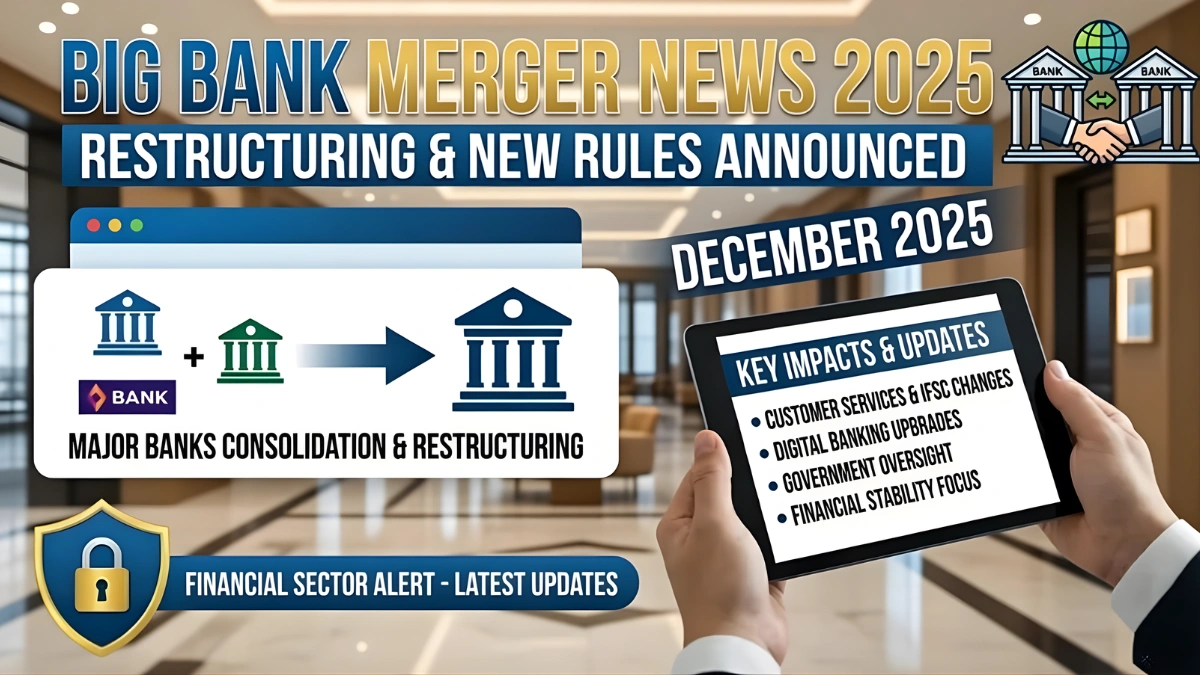
India’s banking landscape is preparing for another major transformation. Indian Bank Merger Shake-Up 2025 has moved into focus with fresh restructuring plans, tighter rules, and a clear roadmap aimed at creating stronger, more efficient banks. For millions of customers, these changes raise urgent questions about accounts, branches, services, and safety of deposits.
Why Bank Mergers Are Back on the Agenda in 2025
The push for mergers is driven by the need to strengthen balance sheets, reduce operational duplication, and improve credit flow to the economy. After earlier consolidation rounds, policymakers believe fewer but stronger banks can better handle bad loans, technology upgrades, and global competition.
The process is being guided by regulators and policymakers under the oversight of the Reserve Bank of India, ensuring financial stability remains the top priority.
Which Banks Are Likely to Be Affected
While no final list has been officially confirmed, public sector banks remain at the center of restructuring discussions. Smaller and mid-sized banks with overlapping networks or weaker financial metrics are expected to be evaluated for merger or realignment.

Private banks are less likely to see forced mergers, though voluntary consolidation remains a possibility depending on market conditions.
New Rules Customers Must Understand During a Merger
Bank mergers bring operational changes that customers should be aware of. Account numbers, IFSC codes, branch management, and service channels may be updated gradually to ensure a smooth transition.
• Customers should update KYC details, track official bank communications, and avoid reacting to rumors during the merger phase.
This single precaution helps prevent service disruption and fraud risks.

What Happens to Your Bank Account and Deposits
One of the biggest fears during mergers is deposit safety. Authorities have repeatedly clarified that customer deposits remain protected during and after a merger. Accounts continue to function, and balances are transferred seamlessly to the merged entity.
Interest rates on deposits and loans usually remain unchanged initially and are revised only after formal notifications.
Impact on Branches and Banking Services
Branch rationalization is a key part of restructuring. Some branches may be merged or relocated, especially where coverage overlaps. However, banks are expected to maintain service continuity through alternative branches and digital platforms.
Digital banking services, UPI, ATMs, and mobile apps typically remain operational throughout the merger process.

How Employees and Service Quality Are Affected
Mergers often raise concerns about staff roles and service delays. Banks usually follow phased integration plans to avoid disruption. Over time, customers may benefit from improved service standards, better technology, and wider product offerings.
Short-term inconvenience may occur, but long-term efficiency is the intended outcome.
Key Changes Expected Under Indian Bank Merger Shake-Up 2025
| Area | What Customers Can Expect |
|---|---|
| Bank Structure | Fewer but stronger banks |
| Account Safety | Deposits remain protected |
| Branch Network | Possible consolidation |
| Digital Services | Largely unaffected |
| Customer Action | Update details and stay informed |
This overview helps customers quickly grasp what matters most during the transition.
Why the Government Is Pushing Banking Restructuring Now
Economic growth, credit expansion, and financial resilience require banks that can lend confidently and absorb shocks. The 2025 merger push aligns with long-term goals of reducing NPAs, improving governance, and strengthening public sector banks to global standards.

What Customers Should Do Right Now
Customers should not panic or rush to close accounts. Instead, they should follow official updates, verify messages directly with banks, and ensure contact details are updated. Using digital banking channels can also reduce dependency on physical branches during transition phases.
Conclusion: The Indian Bank Merger Shake-Up 2025 marks another decisive step toward building a stronger and more resilient banking system. While restructuring may bring short-term adjustments, customer deposits remain safe and services are designed to continue smoothly. Staying informed and proactive will help customers navigate these changes with confidence.
Disclaimer: Bank merger details, timelines, and rules are subject to official announcements and may vary by institution.